More people now ask ChatGPT, Perplexity or Gemini for a recommendation before they search. When the assistant links to your website and someone clicks, that visit is often your most qualified traffic: they arrive with their question already answered.
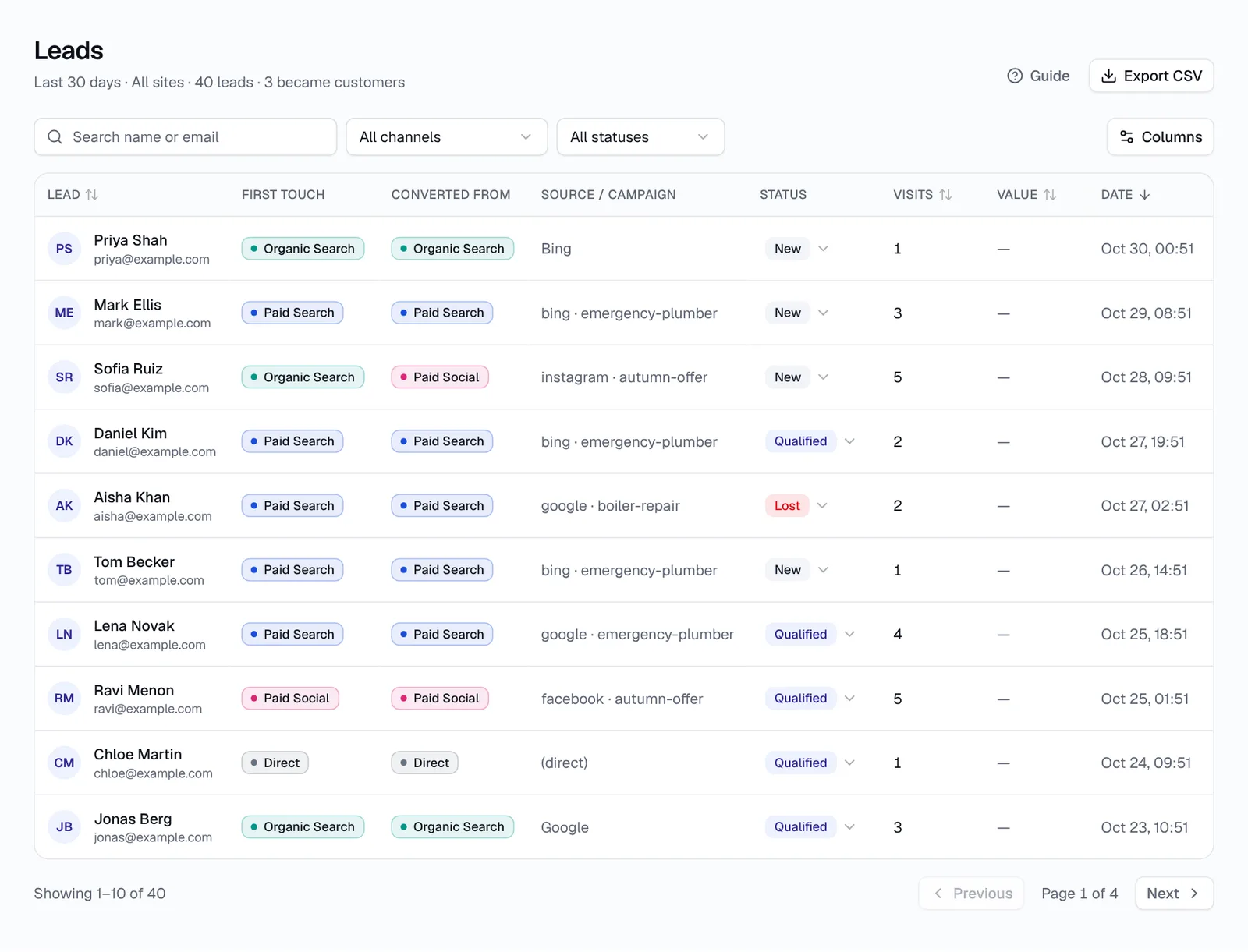
The problem: most analytics tools can't tell. These visits frequently land in the Direct bucket, so you never learn that an AI assistant is recommending you.
Why AI traffic hides as Direct
When someone clicks a link inside an AI assistant, the browser may or may not pass on where they came from. Many tools only look at UTM tags, which AI assistants rarely add, so the visit looks like someone typed your address.
- Some assistants pass a referrer like chatgpt.com or perplexity.ai
- Some apps open links in an in-app browser that strips the referrer
- Copy-pasted links from an answer carry no referrer at all
What to do with the data
Find the pages AI assistants trust
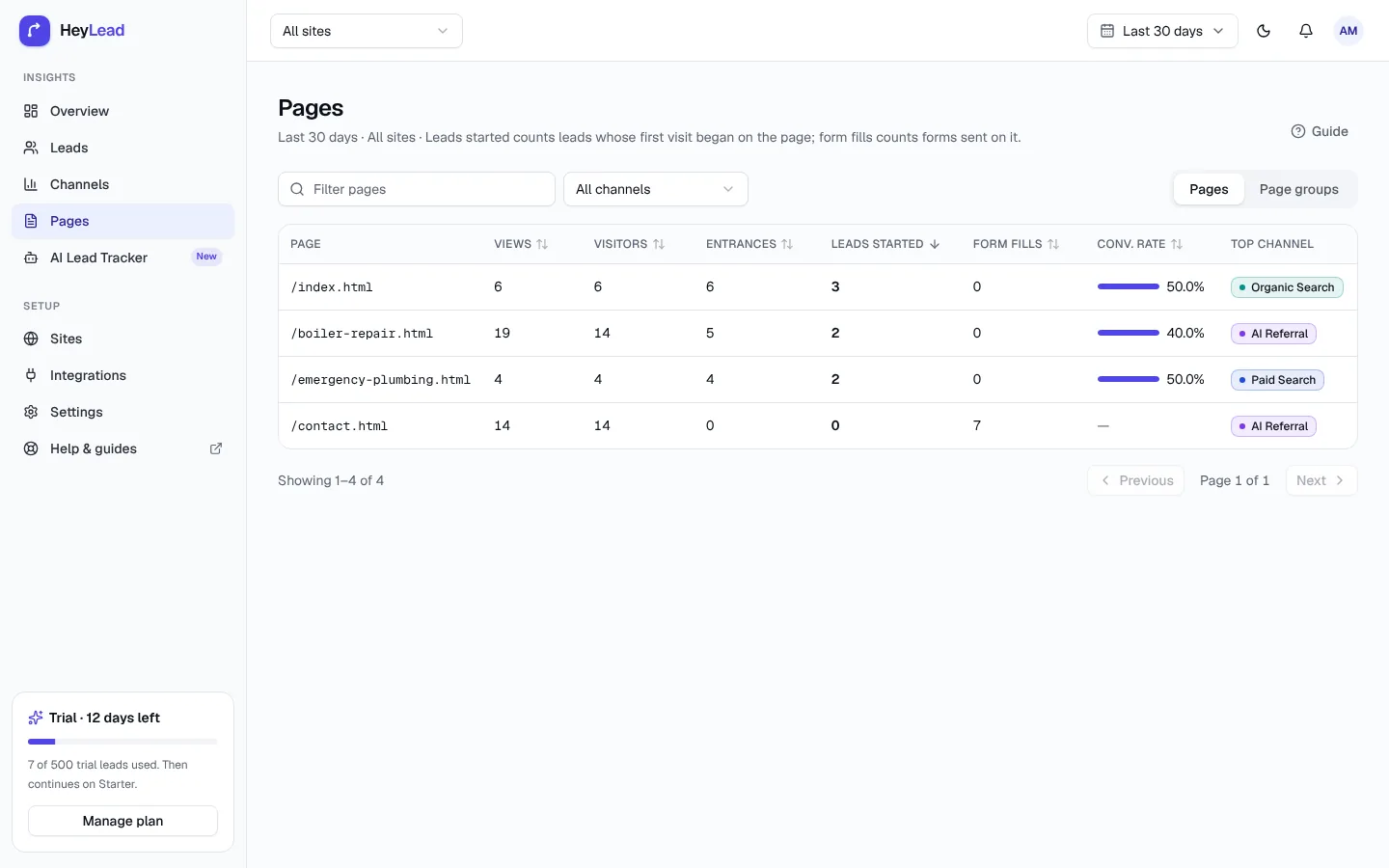
Look at which landing pages AI referrals arrive on. Those are the pages the assistants cite. Keep them accurate, up to date and clear about prices, locations and what you offer.
Compare conversion rates
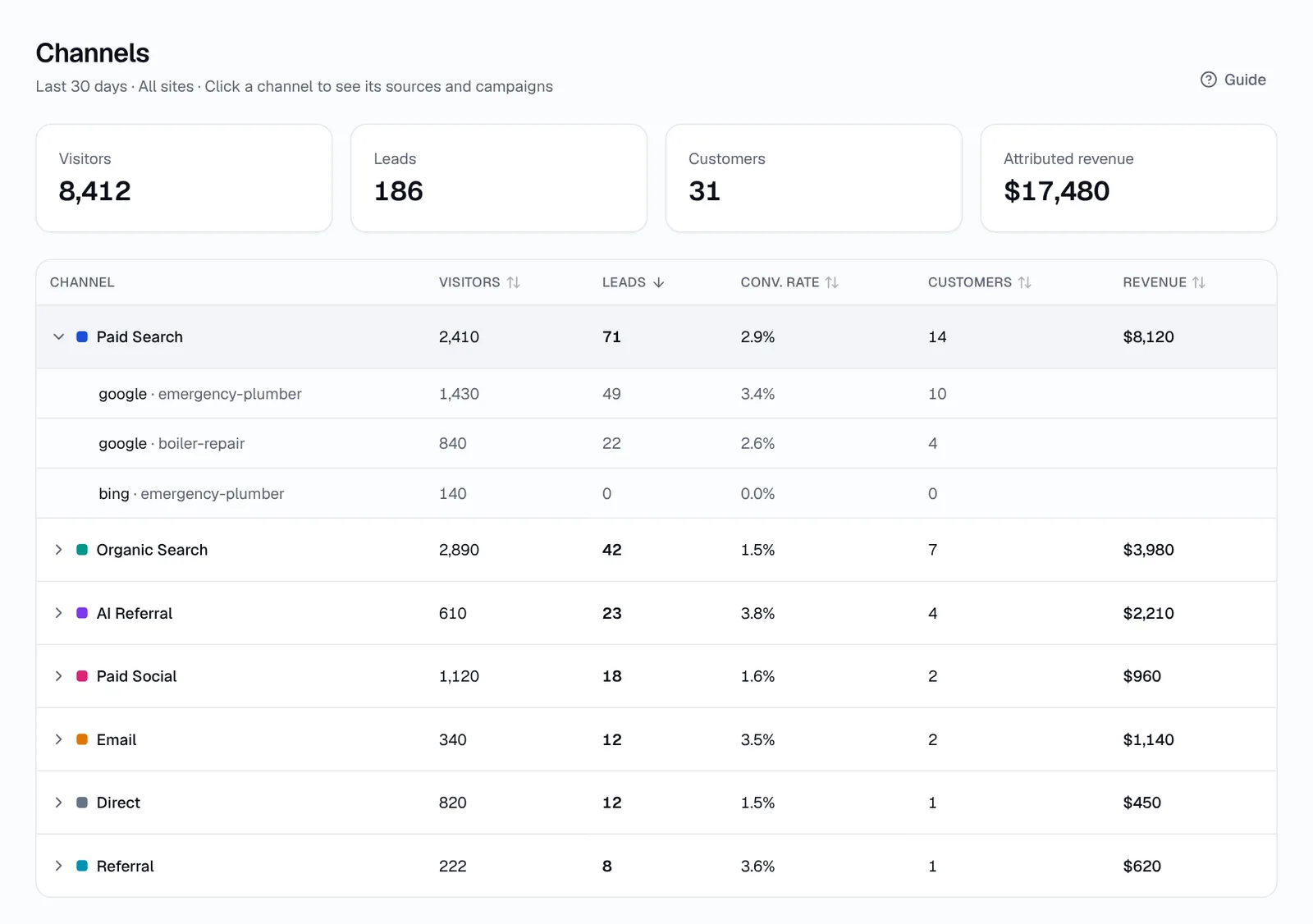
In many businesses, AI referrals convert better than social traffic, because the visitor has already been told you are a good fit. If that's true for you, it's a strong reason to invest in the content those assistants read.
A five-minute checklist
- Install a tracker that recognises AI referrers
- Check your AI Referral numbers after two weeks
- List the top three pages AI assistants send people to
- Make sure those pages answer the obvious questions in plain language
- Re-check monthly, as this channel is growing fast