Quick answer
- Cost per lead is what you pay for each enquiry; cost per customer, often called cost per acquisition, is what you pay for each paying customer.
- Cost per lead is useful for spotting problems early, but cost per customer is the number that should decide budgets, because cheap leads often convert poorly.
- To work out cost per customer by channel, you need the spend per channel, the source of every lead, and which leads became customers.
- Add customer value to see return on spend, and compare it with how much a customer is worth over time.
- Review both numbers monthly, and move budget towards channels with the lowest cost per customer and the best return, not the cheapest leads.
Cost per lead is what you pay for each enquiry, and cost per customer, often called cost per acquisition, is what you pay for each paying customer. Cost per lead helps you spot problems early, but cost per customer should decide your budget, because a channel with cheap leads can still bring the most expensive customers.
Almost every ad platform and agency report leads with cost per lead. It's quick to calculate and it moves fast, so it gets all the attention. But you don't pay your bills with leads. A channel that sends lots of cheap enquiries from the wrong people can look like the star of the month while quietly losing money.
This guide explains both numbers in plain terms, shows how to work them out for every channel, and explains how to use them together to decide where your marketing budget goes.
What is cost per lead?
Cost per lead, or CPL, is the marketing spend on a channel divided by the number of leads it produced. A lead is anyone who gets in touch: a form fill, a quote request, a booking or a demo request.
Cost per lead = spend on a channel ÷ leads from that channel
If you spend £1,000 on Facebook ads in a month and they bring 50 enquiries, your cost per lead is £20.
Cost per lead is useful because:
- It is available quickly. Leads arrive within days, so you can spot a broken campaign fast.
- It compares ads within one channel. Two Google Ads campaigns aimed at the same customers can be compared on cost per lead.
- It warns about rising costs. If cost per lead suddenly doubles, something changed: competition, targeting or the landing page.
Its weakness is simple: it says nothing about whether those leads ever buy.
What is cost per customer?
Cost per customer is the marketing spend on a channel divided by the number of paying customers it produced. It is often called cost per acquisition, or CPA.
Cost per customer = spend on a channel ÷ customers from that channel
If that same £1,000 of Facebook ads brought 50 enquiries but only 2 became customers, your cost per customer is £500.
Cost per customer is the number that matters for budgets, because it is directly comparable with what a customer is worth to you. If a customer is worth £400 in profit, a £500 cost per customer means the channel loses money, however cheap its leads look.
A note on terms: ad platforms often use "CPA" for their own cost per conversion, which may count leads or even form views rather than customers. When you talk about cost per customer, make sure everyone means paying customers.
How are cost per lead and cost per customer connected?
Cost per lead and cost per customer are connected by the lead-to-customer rate: the share of leads from a channel that become paying customers.
Cost per customer = cost per lead ÷ lead-to-customer rate
That is why channels with similar costs per lead can have very different costs per customer. Here is an example with made-up numbers for a business spending £4,500 a month:
| Channel | Spend | Leads | Customers | Cost per lead | Lead-to-customer rate | Cost per customer |
|---|---|---|---|---|---|---|
| Google Ads | £2,000 | 40 | 10 | £50 | 25% | £200 |
| Facebook ads | £1,500 | 75 | 5 | £20 | 7% | £300 |
| Directory listing | £1,000 | 50 | 2 | £20 | 4% | £500 |
By cost per lead, Facebook and the directory look two and a half times better than Google Ads. By cost per customer, Google Ads is the cheapest channel and the directory the most expensive. Judging on cost per lead alone would move money in exactly the wrong direction.
Why do cheap leads often become expensive customers?
Cheap leads often become expensive customers because the things that make leads cheap, such as broad targeting, low-intent placements and easy forms, also bring people who aren't ready or able to buy.
Common reasons cheap leads convert poorly:
- Low intent. Someone scrolling social media who taps a quick form is less ready than someone who searched for your exact service.
- Shared leads. Lead-selling services may send the same enquiry to several businesses, so your chance of winning it is lower.
- Wrong fit. Broad targeting brings people outside your area, budget or service range.
- Incentive-driven sign-ups. Discounts and giveaways attract bargain hunters who never return.
- Duplicates and spam. Ad platforms may count the same person twice or include junk submissions.
None of this makes those channels useless. It means you can only judge them properly by what their leads go on to buy.
What do you need to work out cost per customer by channel?
To work out cost per customer by channel you need three things: the spend on each channel, the source of every lead, and which leads became customers.
| What you need | Where it comes from | Common gap |
|---|---|---|
| Spend per channel | Ad platforms, invoices, directory and agency fees | Fixed fees like directories and agencies get forgotten |
| Source of every lead | A lead tracker that records the channel of each enquiry | Leads with no source, filed as Direct |
| Which leads became customers | Your sales records, CRM or job system | Outcomes never recorded against the lead |
| Customer value (for return on spend) | Invoices or deal values | Value kept in a separate system |
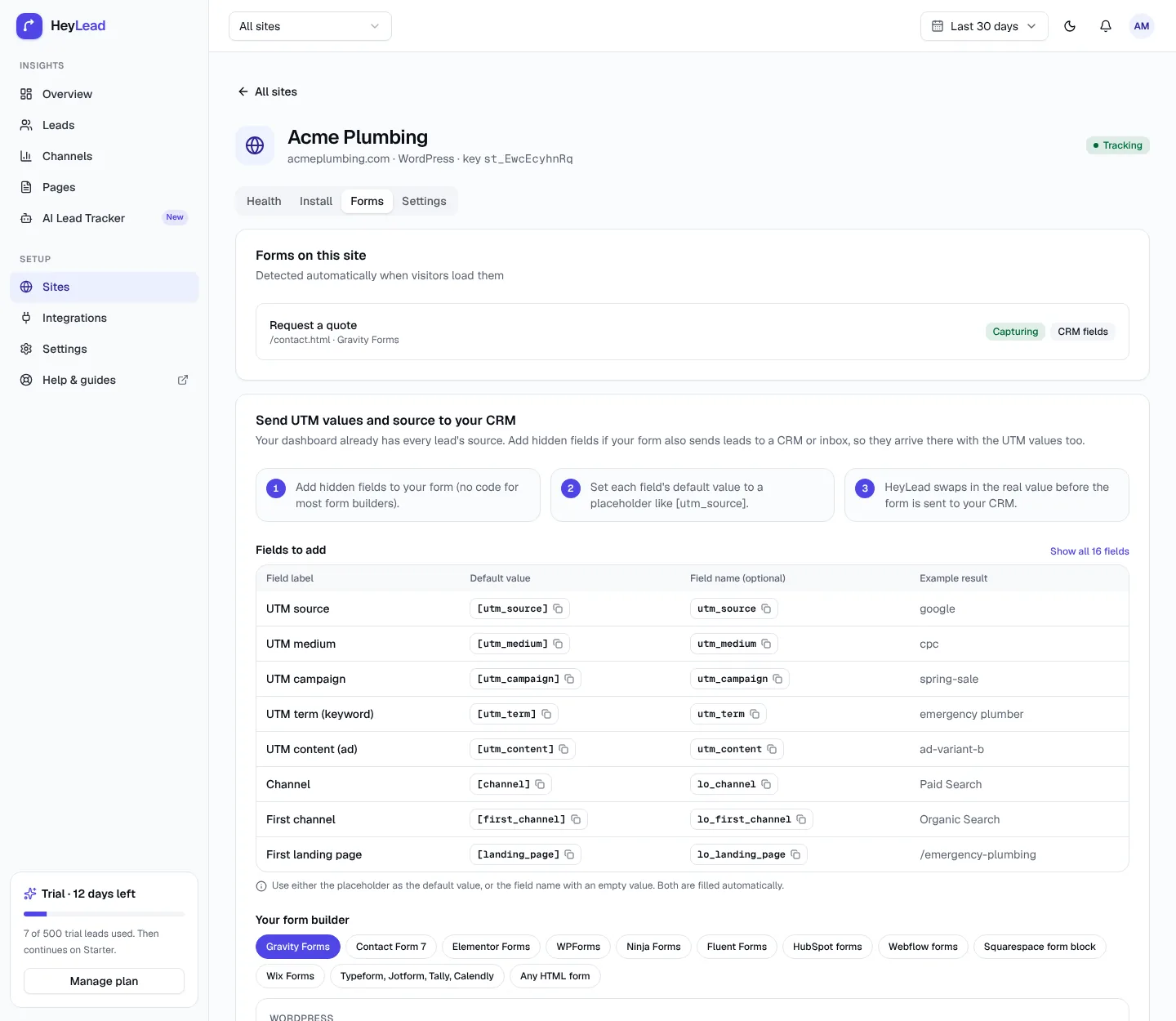
The middle two are where most businesses fall down. Without the source of every lead, you can't split customers by channel. Without outcomes, you can't count customers at all. A lead tracker such as HeyLead records the source of every enquiry automatically, and lets you mark each lead as a customer with its value.
How do you calculate both numbers, step by step?
You can calculate cost per lead and cost per customer for every channel once a month in about half an hour.
- Pick a period. A calendar month works for most businesses. Use the same period for spend, leads and customers.
- List spend per channel. Include ad spend, directory fees, agency fees and any other marketing costs, grouped by the same channels your lead tracker uses.
- Count leads per channel. Use your lead tracker's channel report for the period.
- Count customers per channel. Count the leads from that period that became paying customers, by channel.
- Divide. Spend ÷ leads gives cost per lead; spend ÷ customers gives cost per customer.
- Add value. Sum the customer value per channel and divide by spend to get return on spend.
- Compare and decide. Rank channels by cost per customer and return, then adjust next month's budget.
A simple spreadsheet with one row per channel is all you need:
| Channel | Spend | Leads | Customers | Revenue | Cost per lead | Cost per customer | Return on spend |
|---|---|---|---|---|---|---|---|
| Google Ads | £2,000 | 40 | 10 | £9,500 | £50 | £200 | 4.8× |
| £1,500 | 75 | 5 | £3,000 | £20 | £300 | 2.0× |
The numbers in this table are made up; use your own.
How do customer value and return on spend change the picture?
Customer value changes the picture because channels don't just bring different numbers of customers; they bring different kinds. A channel with a higher cost per customer can still be the best one if its customers spend more or stay longer.
| Measure | Formula | What it tells you |
|---|---|---|
| Return on spend | Revenue from a channel ÷ spend on it | Whether the channel pays for itself right now |
| Average customer value | Revenue ÷ customers | Which channels bring bigger jobs or orders |
| Customer lifetime value | Average value × typical number of purchases | What a customer is worth over time |
| Value-to-cost ratio | Lifetime value ÷ cost per customer | How much room you have to spend more |
Many small businesses aim for a customer's lifetime value to be several times their cost per customer, leaving room for overheads and profit. The right ratio for you depends on your margins, but the principle is the same: compare what a customer costs with what they are worth.
When should you still watch cost per lead?
Cost per lead is still worth watching in three situations, as long as it isn't the number that makes the final decision.
- Early in a campaign. Customers can take weeks to appear. Cost per lead tells you within days whether a new campaign is wildly off.
- Comparing similar ads. Within one channel, aimed at the same people, cost per lead is a fair way to compare versions of an ad or landing page.
- Long sales cycles. If customers take months to buy, track cost per qualified lead, a lead that meets your basic fit criteria, until enough customers come through.
A good rule: use cost per lead to spot problems and test ideas, and cost per customer to set budgets.
What are the most common mistakes with these numbers?
- Budgeting on cost per lead. It rewards channels that bring cheap, low-quality enquiries.
- Trusting each platform's own numbers. Every platform counts conversions its own way and claims the same leads.
- Forgetting fixed costs. Directory subscriptions, agency retainers and tools are spend too.
- Mixing time periods. Spend from one month and customers from another give meaningless results.
- Not recording outcomes. Without marking customers, cost per customer can't be calculated.
- Ignoring Direct and untagged leads. If many leads have no source, cost per customer per channel will be wrong. Fix tracking before drawing conclusions.
- Judging too soon. Wait at least one sales cycle before cutting a channel on cost per customer.
Key takeaways
- Cost per lead is spend divided by enquiries; cost per customer is spend divided by paying customers.
- The two are linked by the lead-to-customer rate, which varies widely between channels.
- Cheap leads often become expensive customers, so budget on cost per customer.
- You need spend per channel, the source of every lead and which leads became customers.
- Add customer value to see return on spend, and compare cost per customer with lifetime value.
- Use cost per lead for early warnings and tests, not final decisions.
Read how marketing attribution works, how agencies use these numbers in client reporting, or check pricing to start tracking customers by channel.
Frequently asked questions
What is the difference between cost per lead and cost per customer?
Cost per lead is marketing spend divided by the number of enquiries a channel produced. Cost per customer, also called cost per acquisition or CPA, is spend divided by the number of paying customers it produced. The gap between them is the lead-to-customer rate.
Which is more important, cost per lead or cost per customer?
Cost per customer, for deciding budgets. A channel with cheap leads can still lose money if few of them buy. Cost per lead is a useful early signal, because customers take longer to appear, but it should never be the final judge.
How do I calculate cost per customer by channel?
Take the spend on a channel for a period, then count how many paying customers came from that channel in the same period. Divide spend by customers. You need a lead tracker that records each lead's source and a way to mark which leads became customers.
Is cost per acquisition the same as customer acquisition cost?
They are often used loosely for the same idea. In advertising, CPA usually means the cost per conversion an ad platform counts, which may be a lead, not a customer. Customer acquisition cost usually means all sales and marketing cost divided by new customers. Define the term you use and keep it consistent.
What is a good cost per lead?
There is no universal good number. It depends on your price, margin and close rate. A good cost per lead is one that, after your lead-to-customer rate, gives a cost per customer comfortably below what a customer is worth to you.
Why do ad platforms show a different cost per lead from my own numbers?
Ad platforms count conversions their own way, often including form views or duplicates, and they each claim credit for the same lead. Your own lead tracker counts each enquiry once, by the channel that brought it, so its numbers are lower and more reliable for comparing channels.
How long should I wait before judging a channel by cost per customer?
At least one full sales cycle. If customers usually buy within a week, a month of data is enough. If buying takes months, judge on cost per qualified lead in the meantime and confirm with cost per customer later.
Does HeyLead calculate cost per customer automatically?
HeyLead shows leads, customers and revenue for every channel and campaign once you mark leads as customers with a value. It doesn't import ad spend, so you divide your spend for each channel by the customers HeyLead shows to get cost per customer.